Gumbo vs. Jambalaya: What's the Difference and Which Should You Try?
Gumbo vs. Jambalaya: The Quick Answer

Gumbo and jambalaya are both Louisiana favorites, but the simplest difference is how the rice is used. Gumbo is a rich, stew-like dish that is typically paired with rice. Jambalaya is a rice-based dish where the rice becomes part of the main preparation. Gumbo is ideal when you want something spoonable, warming, and stew-like, while jambalaya is a great choice when you want a hearty rice-centered meal. At Beau Legs Fish & Chips in Lacey, WA, both dishes help introduce Pacific Northwest diners to the satisfying flavors of Southern comfort food.
Why Are Gumbo and Jambalaya So Often Confused?
If you did not grow up eating Southern or Louisiana cuisine, it is easy to understand why gumbo and jambalaya get confused.
Both are strongly associated with Louisiana. Both can include vegetables, bold seasonings, and different proteins. Both are hearty comfort foods. And, of course, both involve rice.
But that does not make them interchangeable.
Think about pizza and pasta. They may share several ingredients and come from related culinary traditions, but nobody would mistake one for the other. Gumbo and jambalaya have a similar relationship.
Their shared Louisiana heritage gives them common ground, while their consistency, cooking methods, and overall eating experience make them distinct.
Understanding those differences can help you decide which one to try the next time you are craving Southern food in Lacey.
What Is Gumbo?
Gumbo is a stew closely associated with Louisiana cooking.
One of its defining qualities is its rich liquid base. Recipes differ considerably, but gumbo is generally built in layers, with ingredients coming together to create a deep, savory flavor.
Many versions use a roux, a cooked combination of fat and flour, to contribute flavor and body. Vegetables and seasonings add further complexity, while seafood, meat, or other ingredients may complete the dish depending on the recipe.
Rice has an important role, but it remains distinct from the stew itself.
That means the gumbo and rice meet when the meal is served rather than becoming a single rice dish during preparation.
The result is a meal with a spoonable consistency that is especially satisfying when you want something warm and comforting.
For diners in Western Washington, that can make gumbo particularly appealing during the cooler and wetter parts of the year.
What Is Jambalaya?
Jambalaya takes a different approach.
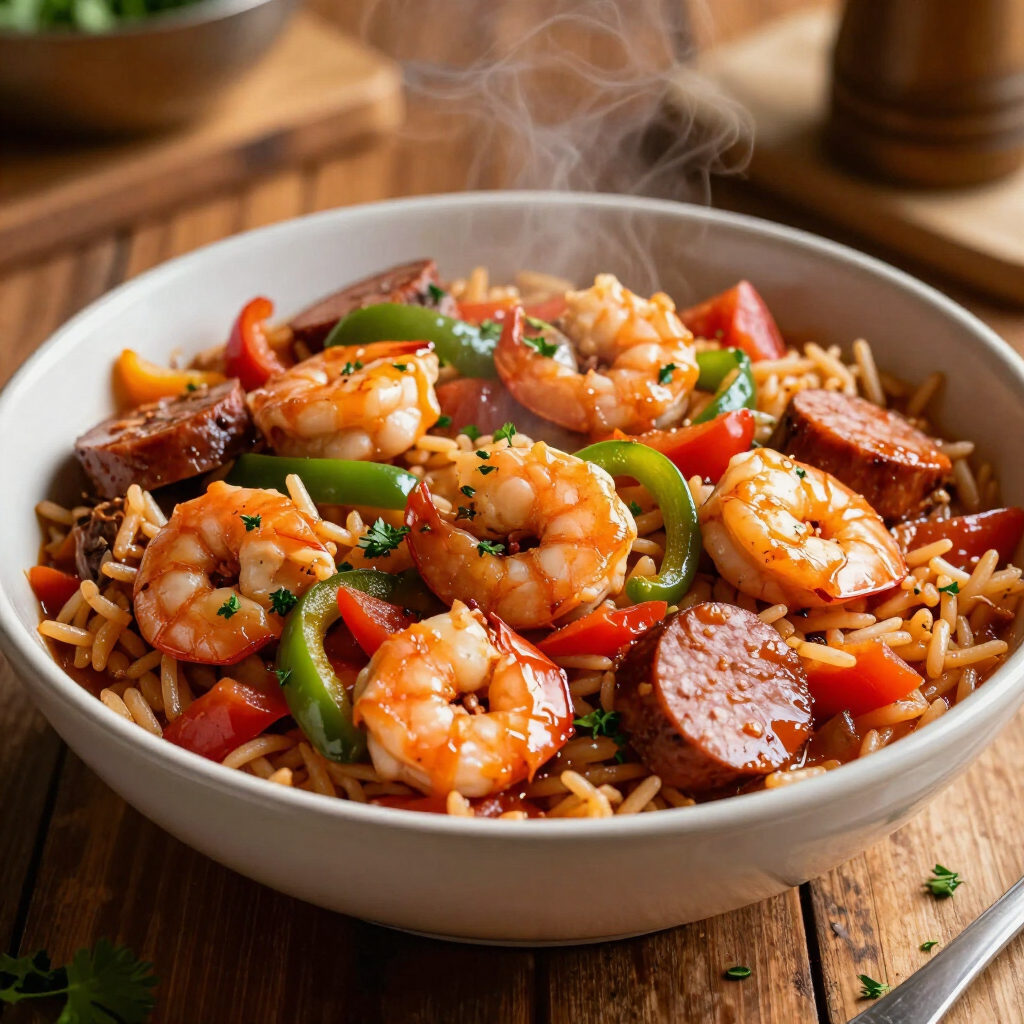
Rather than being a stew served with rice, jambalaya is fundamentally a rice dish.
The rice takes on the flavors of the seasonings and other ingredients, becoming part of the overall dish rather than simply accompanying it.
This gives jambalaya a different texture and eating experience from gumbo.
Instead of spooning a stew together with rice, you get a unified dish where savory flavors are distributed throughout the rice.
Jambalaya can be filling enough to stand alone as a meal, which helps explain why it has remained such an enduring comfort food.
Like gumbo, jambalaya recipes vary. There is no need to assume that every restaurant, household, or region will prepare it exactly the same way.
That variation is part of the tradition.
Gumbo vs. Jambalaya: The Main Differences
For a quick comparison, here are the most important distinctions.
| Feature | Gumbo | Jambalaya |
|---|---|---|
| Basic style | Stew-like dish | Rice-centered dish |
| Role of rice | Commonly served with the dish | Integrated into the dish |
| Texture | More liquid and spoonable | Thicker, rice-based texture |
| Overall experience | Similar to enjoying a hearty stew | Similar to enjoying a seasoned rice entrée |
| Best for | Stew and soup lovers | Rice-dish lovers |
| Comfort factor | Warm and deeply satisfying | Hearty and filling |
Neither is inherently better.
The question is what kind of meal you are craving.
Which Is Better on a Cold or Rainy Washington Day?
This is a difficult category because both dishes qualify as serious comfort food.
Still, gumbo may have a slight advantage if you specifically want something warm and stew-like.
Imagine one of those familiar Lacey afternoons when the sky stays gray, rain is falling, and the temperature makes you want something substantially more comforting than a cold sandwich.
A warm serving of gumbo fits that moment naturally.
The combination of a rich base, savory ingredients, seasoning, and rice provides the kind of warmth people often seek from chowders, soups, and stews during Pacific Northwest weather.
Jambalaya provides a different kind of comfort. It is less about the warming sensation of a stew and more about the satisfaction of a substantial rice dish.
If you have had a long day and want something filling, jambalaya may win.
The good news is that Western Washington provides enough cool days to try both.
Which Is Better for Lunch?
Jambalaya can be particularly convenient for lunch because everything comes together as one dish.
You get rice, seasoning, and the other components of the meal without needing several separate items.
That makes it a satisfying choice when you want lunch to carry you through a busy afternoon.
Gumbo can work equally well, especially if you prefer a bowl-style lunch or want something warm during colder weather.
The better question may be: What are you doing after lunch?
If you want a substantial rice dish before a busy afternoon, consider jambalaya.
If you are taking a break on a cool day and want something warming and spoonable, gumbo may be exactly what you need.
Which Dish Is Better for Someone Trying Southern Food for the First Time?
Both can be excellent introductions, but your existing preferences can guide the choice.
Try gumbo first if you already enjoy:
- Stews
- Chowders
- Rich soups
- Spoonable comfort food
- Meals served with rice
Try jambalaya first if you enjoy:
- Seasoned rice
- One-dish meals
- Hearty entrées
- Savory rice dishes
- Food with flavor distributed throughout every bite
There is no requirement to be an expert on Louisiana cuisine before ordering either one.
Part of the pleasure of visiting a restaurant with foods you did not grow up eating is discovering what you like.
Start with the dish that sounds most appealing and explore the other one on another visit.
Are Gumbo and Jambalaya Always Spicy?
This is one of the biggest misconceptions about Southern and Louisiana-inspired food.
Bold flavor does not necessarily mean extreme heat.
Both gumbo and jambalaya can use a range of seasonings, but recipes vary. Some versions may have noticeable heat, while others focus more heavily on savory, aromatic, and layered flavors.
That distinction matters for diners who avoid very hot food.
"Cajun," "Creole," or "Southern" should not automatically be interpreted as "too spicy."
If heat level is important to you, the simplest approach is to ask the restaurant about the current preparation before ordering.
That way, you can choose based on accurate information rather than assumptions.
Why Rice Matters So Much
Rice may appear simple, but it is one of the most important reasons gumbo and jambalaya provide different experiences.
With gumbo, rice complements the stew. You can combine the two in each spoonful according to your preference.
With jambalaya, the rice is already carrying the flavor of the dish.
That affects both texture and taste.
Someone who enjoys rice as the foundation of a meal may naturally prefer jambalaya. Someone who sees rice as an accompaniment to a rich sauce or stew may lean toward gumbo.
This is why saying that both dishes "have rice" does not really explain their similarities or differences.
The important question is not whether rice is present.
It is what role the rice plays.
Why Southern Comfort Food Works in Lacey, WA
Louisiana and Washington State are geographically distant, but Southern comfort food has qualities that make sense in the Pacific Northwest.
First, there is seafood.
Washington diners are already accustomed to seafood playing an important role in regional food culture. Southern cooking provides another way to experience seafood through different seasoning traditions, dishes, and combinations.
Second, there is the weather.
Lacey's cooler seasons create plenty of days when warm, hearty food sounds appealing.
Third, diners increasingly appreciate opportunities to experience regional cuisines without traveling thousands of miles.
A local restaurant serving dishes such as gumbo, jambalaya, shrimp and grits, and po'boys gives customers a way to explore another American culinary tradition close to home.
Beau Legs Brings Southern Comfort Food to Lacey
Beau Legs Fish & Chips has been serving Lacey since 2009.
The business was created with a specific purpose: to bring Southern flavor to an area of the Pacific Northwest where dishes such as gumbo and jambalaya can be harder to find.
Although fish and chips are central to the restaurant's identity, Beau Legs offers much more than its name might initially suggest.
Its Southern comfort food offerings include favorites such as:
- Gumbo
- Jambalaya
- Shrimp and grits
- Po'boys
- Wings
- Seafood
That variety allows customers to approach the restaurant in different ways.
You can visit because you want fish and chips, then decide to try gumbo another time. Or you may discover Beau Legs specifically because you have been searching for Southern food near Lacey or Olympia.
Either way, the menu provides room to explore.
What Should You Order Alongside Gumbo or Jambalaya?
Both dishes can be satisfying on their own, but eating with family or friends creates an opportunity to experience more of the menu.
One diner might order gumbo while another chooses jambalaya. Someone else may prefer fish and chips, shrimp and grits, a po'boy, wings, or a seafood platter.
Sharing different foods can be especially useful if several people are new to Southern cuisine.
Instead of committing to only one flavor or texture, everyone gets an opportunity to discover different dishes.
It also makes the differences between gumbo and jambalaya much easier to understand.
Reading about the distinction is useful.
Tasting both is better.
Gumbo or Jambalaya for a Group Meal?
If you are dining with a group, variety usually wins.
Rather than trying to decide which dish everyone should order, consider letting individual preferences guide the table.
People who prefer stew-like meals can choose gumbo. Rice lovers can explore jambalaya. Seafood fans can stick with fried fish or seafood selections, while other diners can explore po'boys, shrimp and grits, or wings.
This flexibility is one of the benefits of a menu that combines Southern comfort food with familiar seafood favorites.
It can work for families where everyone has different tastes as well as groups introducing visitors to Beau Legs for the first time.
Frequently Asked Questions About Gumbo and Jambalaya
What is the biggest difference between gumbo and jambalaya?
The biggest difference is the role of rice. Gumbo is a stew-like dish commonly paired with rice. Jambalaya is a rice-centered dish in which the rice becomes an integral part of the meal.
Is gumbo thicker than jambalaya?
They have completely different consistencies. Gumbo has a liquid, stew-like base, while jambalaya has the consistency of a cooked rice dish. Comparing their thickness directly is therefore less useful than thinking of them as two different categories of food.
Which is spicier, gumbo or jambalaya?
Neither dish is automatically hotter than the other. Spice levels depend on the individual recipe and preparation. If you are concerned about heat, ask about the restaurant's current version before ordering.
Which should I try first?
Choose based on texture. If you enjoy stews, start with gumbo. If you love seasoned rice dishes, start with jambalaya. If both sound appealing, try one now and save the other for your next visit.
Where can I find gumbo and jambalaya in Lacey, WA?
Beau Legs Fish & Chips serves Southern comfort food, including gumbo and jambalaya, in Lacey. The restaurant is located at 8765 Tallon Lane NE, Suite G, Lacey, WA 98516.
Settle the Gumbo vs. Jambalaya Debate for Yourself
So, gumbo vs. jambalaya: which one should you order?
Choose gumbo when you want a rich, warming, stew-like meal paired with rice. Choose jambalaya when you want a hearty rice dish where the ingredients and seasonings come together in every bite.
Or skip the debate entirely and eventually try both.
For diners around Lacey, Olympia, and Thurston County who want to explore Southern comfort food, Beau Legs Fish & Chips offers the opportunity to move beyond the usual restaurant routine and experience dishes that reflect a different regional food tradition.
Beau Legs has been bringing Southern flavor to the area since 2009, alongside familiar favorites such as fish and chips and seafood.
Visit Beau Legs Fish & Chips, 8765 Tallon Lane NE, Suite G, Lacey, WA 98516, or call (360) 915-6328 to ask about current menu options.
The best way to understand the difference between gumbo and jambalaya is ultimately the simplest one: bring your appetite and taste them for yourself
Recent Posts